
Getting Started
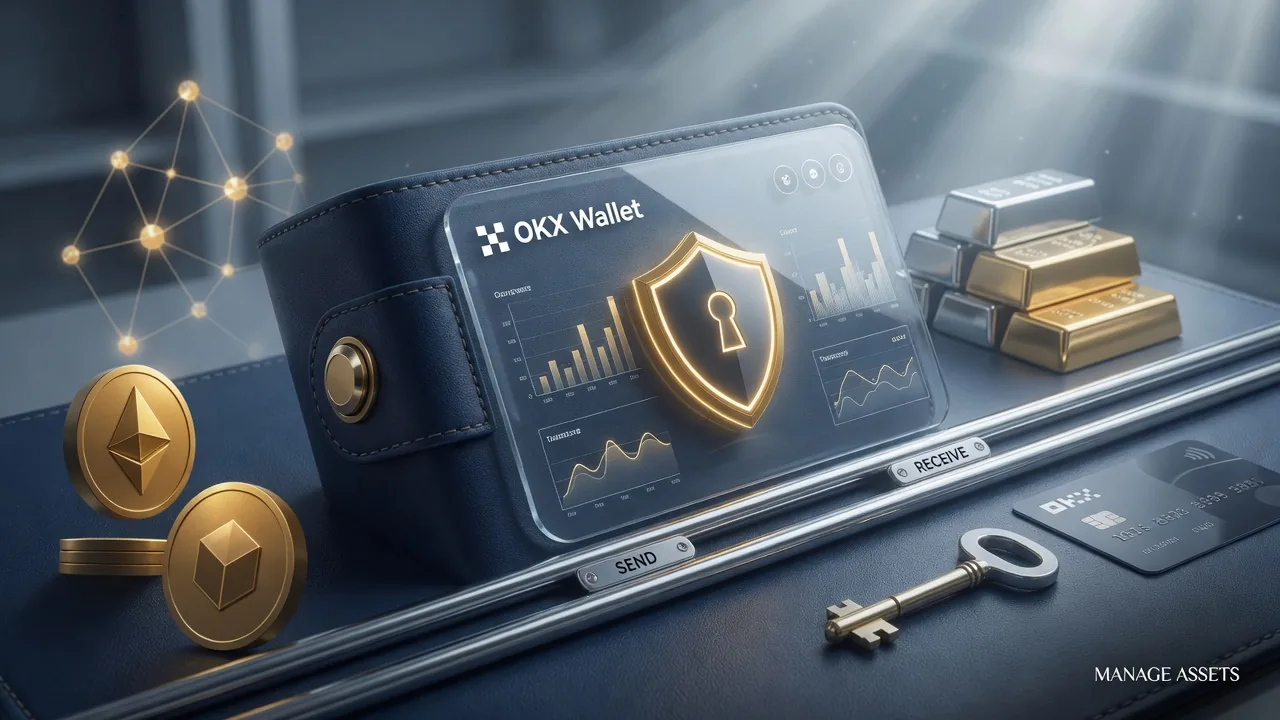
OKX Wallet is a non-custodial and decentralized multi-chain wallet that provides one-stop asset management, secure storage, transfer, and other functions for all users. OKX Wallet helps you to manage your assets across multi-network (e.g. Bitcoin and Ethereum) and numerous devices (e.g. iOS, Android, and web extension) by generating an on-chain identity with a seed phrase more securely and conveniently. It supports multi-seed phrase import and derivation of addresses too.
Checklist
- You can download the extension from Google Chrome Webstore. Select Connect wallet to start.
- To access the Portfolio Dashboard, go to the OKX Wallet website and select Portfolio > Portfolio, or tap your wallet account name > Portfolio.
- How do I view my wallet address?
- On the website:
- Open the OKX Wallet website, select Portfolio > Portfolio
- Select the network and crypto to view your wallet address
- Tap Receive to view the QR code for your wallet address
- On the web extension:
- Open your OKX Wallet web extension, select Receive
- Select crypto and network to view your wallet address
- On the website:
- Open the OKX Wallet website and go to Portfolio > Portfolio > Crypto
Notes
Currently, OKX Wallet supports 70+ networks, including Bitcoin, Ethereum, OKC, Solana, BSC, Polygon, Avalanche, Tron, Arbitrum, etc. It can automatically recognize and connect to different networks without switching. OKX Wallet has multi-chain and cross-chain DEX, Yield farming, NFT marketplace, and DApp discovery. You can easily access over 1,000 DApp protocols and explore the Web3 world with only one wallet.
The OKX Wallet website supports adding two types of wallets:
Connected wallets: wallets where the user holds the seed phrase or private keys, used for unified asset management.
Watch-only wallets: added without importing a seed phrase or private keys, used solely to view assets and on-chain activity for a specified address — making it easy to track fund movements and asset changes.
Details follow the official OKX help article; this page is a learning checklist, not an official mirror.